LIVING TO 100 DIGEST | October 2026

Welcome to the October Living to 100 Digest.
October brings another opportunity to explore how we can live better, longer, and happier.
This month, we’re looking at an important question: How much can we do to reduce our risk of dementia? The research offers encouraging findings, along with some important distinctions between prevention and risk reduction.
We’ll also explore some fun ways to challenge our brains, break familiar routines, and introduce a little novelty into everyday life.
And there’s more news about what’s ahead in 2027, as the Living to 100 Digest prepares to become the Living to 100 Journal, with a greater emphasis on practical exercises, reflection, and personal growth.
As always, the goal is simple: Make the most of the years ahead, whatever they may bring.
Enjoy this month’s Digest!
Joe Casciani, PhD
Founder, Living to 100 Club
💡 Insight: Can We Prevent Dementia? Maybe That’s the Wrong Question
Here’s a number that gets your attention: 45%.
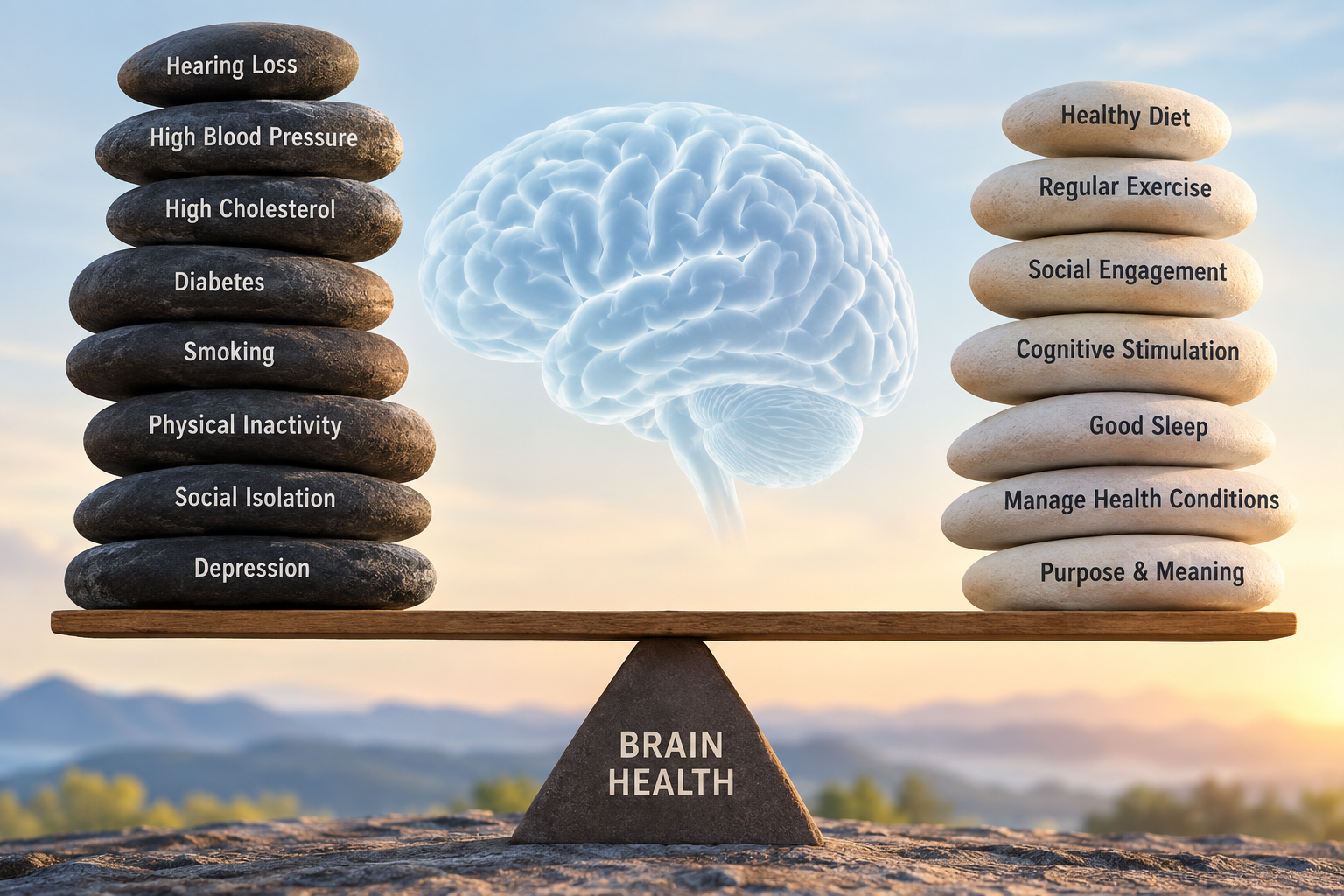
The 2024 Lancet Commission identified 14 potentially modifiable risk factors and estimated that, collectively, they are associated with about 45% of dementia cases worldwide. The World Health Organization has used similar language in its dementia risk-reduction guidance.
That sounds like very good news. And it is.
But it is also easy to misunderstand.
It does not mean that you or I can reduce our personal risk of dementia by 45%. And it certainly does not mean that 45% of Alzheimer’s disease can be prevented if we simply exercise, eat properly, stay socially active, and keep our blood pressure under control.
The science is more complicated than that—and, I would argue, more interesting.
Prevention or Risk Reduction?
I prefer to talk about reducing the risk of dementia rather than preventing it.
Why the distinction?
Alzheimer’s disease has an underlying biological process involving beta-amyloid plaques and abnormal tau. Lewy body disease is associated primarily with alpha-synuclein, while major forms of frontotemporal dementia involve tau or TDP-43 pathology. And particularly as we grow older, these pathologies don’t always occur neatly by themselves. Mixed disease is common.
There is currently no good evidence that following a healthy lifestyle guarantees that these underlying disease processes won’t develop.
But that doesn’t mean we’re powerless.
A more useful way of thinking about dementia is to consider the total burden on the brain.
Imagine that someone has some degree of Alzheimer’s pathology developing in the brain. Now add hypertension, diabetes, high cholesterol, smoking, or obesity. These conditions can damage blood vessels in the brain and contribute to small-vessel disease, infarcts, and white-matter injury. That additional vascular burden can coexist with Alzheimer’s pathology and may lower the threshold at which cognitive problems become clinically apparent.
Other factors may affect the brain through different pathways. Hearing loss, social isolation, depression, and physical inactivity may influence cognitive reserve, sensory stimulation, mood, vascular health, and other processes. The mechanisms aren’t identical, and in some cases we’re still learning exactly how the relationships work.
So perhaps the better question isn’t: “Can I prevent dementia?”
It is: “What can I do to reduce the burden on my brain and influence the course of my cognitive health?”
That is a question we can do something about.
📘 This Month’s Resource: Give Your Brain Something New to Do!
Our brains benefit from novelty and new experiences. The concept of neurobics, popularized by Lawrence Katz and Manning Rubin in Keep Your Brain Alive, encourages us to break familiar routines, engage different senses, and challenge ourselves in unexpected ways.
Here are seven simple activities to try:
Switch hands. Brush your teeth, or pour or stir your coffee with your nondominant hand.
Take a different route. Change your usual walking route and notice unfamiliar sights and sounds.
Challenge your sense of touch. Try identifying familiar objects in a bag without looking.
Change your routine. Reverse the order of your morning activities or sit somewhere different at breakfast.
Engage your sense of smell. Close your eyes and identify familiar scents such as coffee, cinnamon, or citrus.
Learn something unfamiliar. Try a few words in another language, a new rhythm, or a simple craft.
Make new connections. Strike up a conversation with someone new or ask an old friend a question you’ve never asked before.
The goal isn’t perfection. It’s giving your brain something unfamiliar to experience. New experiences and learning encourage neuroplasticity—the brain’s remarkable ability to strengthen and reorganize neural connections throughout life.
These exercises offer enjoyable opportunities for mental stimulation, although they have not been proven to prevent dementia.
Adapted from the general principles of neurobics, a concept also explored in Module 10, How to Expand Our Brain using Neuroplasticity, of the Better, Longer & Happier series.
✉️ Invitation: Bring Brain Health to Life with a Better, Longer & Happier Card Deck
Want to go beyond brain games and explore the science of cognitive health?
Module 10 of the Better, Longer & Happier series offers guided discussions, educational content, and engaging activities designed to support brain health and cognitive growth.
Developed especially for senior living communities, the program is also available in digital format for individuals and small groups.
Explore Better, Longer & Happier →
🎙️ From the Living to 100 Club Podcast
Hear Better, Live Better: Protecting Hearing and Brain Health →
Looking Ahead: The Living to 100 Journal
Coming in 2027: The Living to 100 Journal
Less Reading. More Doing.
Beginning in January, the Living to 100 Digest will become The Living to 100 Journal, a monthly resource designed to help you put the principles of healthy aging into practice.
Each issue will feature practical exercises, reflection questions, conversation starters, and monthly challenges focused on living better, longer, and happier.
Rather than simply reading about aging well, you’ll have opportunities to explore new ideas, build positive habits, and discover what works best for you.
Annual subscription: $100 for 12 monthly issues.
More details on subscribing will be coming soon!
What is one small new experience you could give your brain this week? Share it in the comments.